Key Highlights
- Pay at table technology streamlines the payment process by bringing a handheld terminal directly to your customers.
- Compared to traditional POS payments, this method significantly enhances payment security by keeping the customer’s card in their sight.
- Implementing pay at table solutions can boost your operational efficiency by speeding up table turnover and reducing wait times.
- This modern approach improves the overall dining experience, leading to higher guest satisfaction and convenience.
- Key features to look for include QR code integration, versatile EFTPOS capabilities, and easy bill-splitting options.
- The shift to table ordering and payment helps your staff focus more on customer service rather than running back and forth to a fixed terminal.
Introduction
The way customers pay is changing, and the restaurant industry is no exception. While traditional counter payments have been the standard for years, new technologies are transforming the dining experience. For restaurants aiming to improve efficiency and boost customer satisfaction, understanding different payment methods is crucial. The choice between a modern pay at table solution and a traditional POS system can significantly impact your daily operations and your bottom line. This guide explores the key differences, benefits, and features to help you navigate the evolving payment process.
Essential Differences Between Pay at Table and Traditional POS Payments for Restaurants
Choosing the right payment system for your restaurant involves understanding the fundamental differences between modern and traditional methods. Pay at table brings the transaction to the diner using a portable device, while traditional systems require staff to take customer cards to a fixed POS terminal. This core difference impacts everything from the customer experience to your staff’s workflow.
The contrast between these two payment methods extends to payment security, operational efficiency, and even the hardware you need. By examining these distinctions, you can determine which payment system best aligns with your restaurant’s goals. Let’s look at the specific ways these approaches differ.
1. Payment Process Flow: Table-side vs Counter Transactions
The most significant difference lies in the payment process itself. Traditional methods involve a multi-step journey for both your staff and the customer’s card. A server drops off the bill, returns to collect the customer cards, walks to a fixed terminal to process the payment, and then comes back to the table for a signature. This constant back-and-forth can create delays and service bottlenecks.
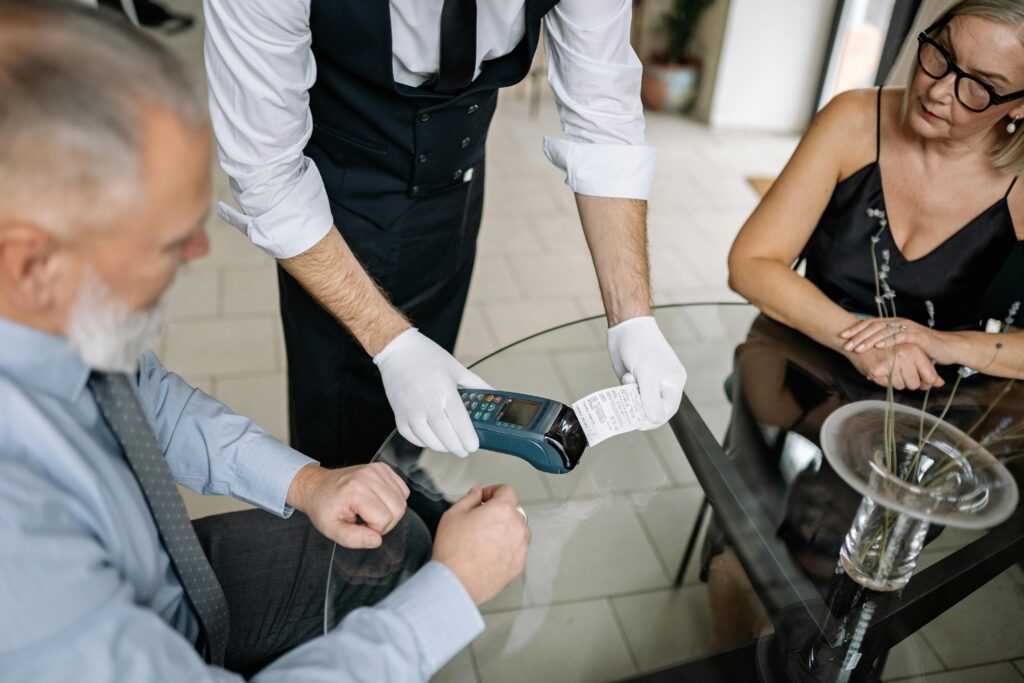
In contrast, tableside payments simplify this entire workflow. Your server brings a handheld payment device directly to the table. Customers can tap, insert, or swipe their cards right there, finalising the transaction in a single, swift interaction. There’s no need for the card to leave the customer’s possession, making the entire process faster and more secure.
This table highlights the contrast in the payment options:
| Step | Traditional POS Payment | Pay at Table Payment |
| Bill Presentation | Server leaves the bill on the table | Server presents the bill on a handheld device |
| Card Handling | Server takes customer cards to a fixed terminal | Customer handles their own card at the table |
| Payment Processing | Processed at a central, fixed POS station | Processed instantly on a portable terminal |
| Completion | Server returns with the receipt for a signature | Transaction is completed and receipt is printed tableside |
2. Customer Interaction and Experience
How you handle payments directly shapes the customer experience. The traditional process of waiting for a server to take a card, process it, and return can lead to frustratingly long wait times at the end of a meal. This delay can leave a sour final impression, even after excellent food and service. Customers value their time, and a slow checkout process can detract from their overall guest satisfaction.
Pay at table technology transforms this final step into a positive interaction. By bringing the payment terminal to the table, you empower customers to pay whenever they are ready, eliminating the waiting game. This creates a better checkout process that feels seamless and respectful of their time.
Furthermore, this method enhances transparency and trust. Customers can watch their payment being processed, which provides peace of mind. This improved convenience and control contribute to a superior dining experience, encouraging repeat business and positive reviews.
3. Security and Financial Management
Payment security is a major concern for both you and your customers. With traditional payment methods where staff handle customer cards, the risk of credit card fraud increases. Unseen activities like card skimming, where card details are illegally copied, become a possibility when the card leaves the table. This potential vulnerability can damage your restaurant’s reputation.
Pay at table solutions offer better security by design. Since the customer’s card never leaves their hand, the opportunity for card skimming is virtually eliminated. This simple change in the process provides a powerful layer of protection for sensitive customer data and significantly reduces the chances of fraudulent activity.
This enhanced security not only protects your customers but also your business. Fewer fraudulent transactions mean fewer chargebacks and associated fees, leading to more stable financial management. Offering a secure payment environment shows your customers that you prioritise their safety, building trust and confidence in your establishment.
4. Staff Workflow and Training
Adopting new technology naturally changes your staff workflow, and pay at table systems are designed to improve it. In a traditional setup, servers spend a considerable amount of time walking between tables and the fixed POS station. These server returns add up, especially during busy services, reducing the time they can spend attending to guest needs.
Implementing pay at table technology streamlines these tasks, boosting operational efficiency. Staff can process payments, split bills, and close out tables without ever leaving the dining area. This frees them up to focus on what truly matters: providing excellent service, upselling menu items, and engaging with customers. This efficiency allows you to make better business decisions regarding staffing levels.
Of course, any new technology requires proper training. Your team will need to be comfortable using the handheld devices and explaining the secure, convenient process to guests. Thorough training ensures a smooth transition and helps staff confidently use the system to its full potential, ultimately making their jobs easier and more productive.
5. Hardware and Venue Suitability
Your choice of payment system also depends on hardware requirements and your venue’s layout. Traditional systems rely on a fixed POS terminal, which is a stationary hub for all transactions. This can create queues for staff during peak hours and may not be practical for venues with multiple floors or large outdoor seating areas.
Pay at table solutions use portable, handheld devices. These wireless payment terminals give your staff the flexibility to take payments anywhere in your venue, from a cosy corner booth to a patio table. While this requires an investment in multiple devices and a stable internet connection, it can lead to long-term cost savings through improved efficiency and faster table turnover.
This technology isn’t just for large, formal restaurants. Pay at table is highly suitable for businesses of all sizes, including bustling cafes, bars, and pubs. Any venue looking to reduce payment friction and serve more customers can benefit. The flexibility of handheld payment terminals makes them a versatile choice for almost any hospitality setting.
Benefits of Implementing Pay at Table Solutions
Adopting a pay at table payment system offers a host of compelling benefits for your hospitality business. This modern approach is about more than just convenience; it’s a strategic move to enhance your entire operation. By bringing the payment process directly to your guests, you can significantly improve efficiency, security, and overall guest satisfaction.
From turning tables faster during your busiest shifts to providing a more secure transaction environment, the advantages are clear. Let’s explore some of the key benefits that can help your restaurant thrive in a competitive market.
Enhanced Customer Satisfaction and Convenience
The final moments of a dining experience are just as important as the first. A long wait to pay can undo all the hard work your team put into providing great food and customer service. Pay at table technology tackles this issue head-on by creating a quick and seamless checkout process right at the end of the meal.
When customers can pay as soon as they’re ready, without waiting for a server to return with a card machine, their perception of the service improves. This level of convenience shows that you value their time, contributing to an excellent experience from start to finish. Happy customers are more likely to leave positive reviews and become loyal patrons.
This streamlined process empowers your guests, giving them control over when and how they pay. Whether they want to split the bill, add a tip, or use a contactless payment method, it can all be done in a few simple steps at the table. This focus on convenience is key to boosting guest satisfaction.
Streamlined Table Turnover and Reduced Wait Times
In the restaurant business, time is money. The ability to turn tables efficiently, especially during peak hours, directly impacts your revenue. Traditional payment methods are often the biggest bottleneck, creating unnecessary wait times as servers juggle multiple tables and a single fixed terminal.
Pay at table solutions break this bottleneck. By processing payments tableside, your staff can finalise bills in a fraction of the time. This increased operational efficiency means tables are cleared and ready for the next party much faster. With fewer touchpoints and no more treks to the POS station, the entire payment cycle is shortened.
Serving more customers each shift is a direct result of this improved workflow. When you turn tables more quickly, you can increase your seating capacity without adding more physical space. This efficiency gain not only boosts your daily earnings but also reduces queues and keeps your restaurant running smoothly.
Improved Payment Security and Reduced Errors
Protecting your customers’ financial information is paramount. Pay at table systems provide a significant upgrade in payment security compared to traditional methods. By ensuring the credit card information never leaves the customer’s sight, you drastically reduce the risk of fraud and data theft.
This approach builds a deep sense of trust with your guests. With fewer people handling sensitive details, the payment processes become inherently safer. Customers feel more secure knowing their card is not being carried around the restaurant, which strengthens your reputation as a responsible business.
In addition to better security, these systems also minimise human error. With integrated payments, there’s no need for staff to manually enter amounts, which can lead to mistakes. The automated process ensures accuracy, reducing the likelihood of chargebacks and simplifying your end-of-day reconciliation.
Key Features to Look For in Pay at Table Systems
When you decide to adopt pay at table technology, it’s important to choose a payment system with the right features for your business. The best way to ensure a smooth transition and maximise benefits is to look for a solution that offers flexibility, security, and ease of use for both your staff and customers.
A robust system will do more than just process payments; it will integrate seamlessly with your point of sale and offer modern conveniences that today’s diners expect. Consider these essential features as you evaluate your options.
QR Code Payment Integration
One of the most popular features in modern payment systems is QR code integration. This allows for truly contactless payments, which have become increasingly popular with diners. With this feature, a unique QR code can be printed on the bill or displayed on a screen at the table.
Customers simply scan the code with their smartphone to be directed to a secure payment page where they can view their bill and pay using their preferred payment methods. This empowers them to complete the transaction on their own device, at their own pace. The benefits include:
- Enhanced Convenience: No need to wait for a server or a terminal.
- Fewer Touchpoints: A hygienic option that minimises physical contact.
- Simplified Checkout Experience: Customers can pay and leave whenever they are ready.
This hands-off approach frees up your staff to focus on other aspects of service, further improving the dining experience while speeding up table turnover.
EFTPOS Terminal Capabilities
The handheld EFTPOS terminal is the core of any pay at table system, so its capabilities are crucial. Look for a device that is robust, user-friendly, and equipped to handle the demands of a busy restaurant environment. A reliable payment processor is essential for ensuring transactions are fast and secure.
Your payment system should support a wide range of payment options to cater to all customer preferences. This flexibility is key to staying competitive and providing a convenient experience. Important capabilities to look for include:
- Multiple Payment Methods: Support for tap-and-go, chip and PIN, swipe, and digital wallets.
- Integrated Payments: The terminal should sync directly with your POS, eliminating manual entry and reducing errors.
- Reliable Connectivity: A strong Wi-Fi or Bluetooth connection is necessary for uninterrupted service.
These features ensure that your payment process is smooth and efficient, making the system a valuable asset for businesses of all sizes.
Customisable Tipping and Bill Splitting Options
Handling tips and splitting bills can be a complicated part of the payment process, especially for large groups. A good pay at table system simplifies these tasks with customisable options that benefit both your customers and your staff.
The system should make it easy for customers to add a tip, often with pre-calculated percentage suggestions. This simple prompt can lead to higher tips for your hardworking team. For bill splitting, the technology should offer flexible solutions. Look for features such as:
- Splitting by Amount: Allowing guests to pay different amounts towards the total.
- Splitting by Item: Assigning different menu items to individual diners.
- Even Splits: Easily dividing the bill among entire tables.
These options eliminate the headache of calculating complex splits manually, allowing your servers to close out tables quickly and accurately. This convenience is a significant advantage for both staff and guests.
Conclusion
In conclusion, the choice between pay at table and traditional POS payments can significantly impact your restaurant’s operation and customer experience. Pay at table solutions offer modern conveniences such as enhanced customer satisfaction, streamlined service, and improved payment security. By adopting this innovative approach, restaurants can not only meet the demands of today’s tech-savvy diners but also increase efficiency in staff workflows and table turnover rates. As you consider the best fit for your establishment, take the time to evaluate key features that align with your business goals. Embracing these advancements can set your restaurant apart in a competitive market. If you’re interested in exploring pay at table options further, don’t hesitate to reach out for a consultation!
Frequently Asked Questions
How do pay at table payments differ from traditional POS methods?
Pay at table brings a portable terminal to the customer, allowing them to pay directly at their seat. This differs from traditional methods where a server takes the customer’s card to a fixed POS system. The main benefits are a faster, more secure payment process and an improved dining experience.
Is pay at table technology secure for processing payments?
Yes, it is highly secure. Since the customer’s card never leaves their possession, the risk of credit card fraud or card skimming is significantly reduced. This method protects sensitive payment information and enhances the security of your payment processes, building trust with your guests.
Can pay at table solutions be used in cafes and bars as well as restaurants?
Absolutely. Pay at table solutions are versatile and ideal for any hospitality setting, including cafes, bars, and pubs. The flexibility of portable payment terminals makes them effective for businesses of all sizes, helping to manage payments efficiently regardless of the venue’s layout or number of guests.

 Ezarynna Flintfield writes the kind of tech news and innovations content that people actually send to each other. Not because it's flashy or controversial, but because it's the sort of thing where you read it and immediately think of three people who need to see it. Ezarynna has a talent for identifying the questions that a lot of people have but haven't quite figured out how to articulate yet — and then answering them properly.
They covers a lot of ground: Tech News and Innovations, Emerging Technology Trends, Practical Software Tips, and plenty of adjacent territory that doesn't always get treated with the same seriousness. The consistency across all of it is a certain kind of respect for the reader. Ezarynna doesn't assume people are stupid, and they doesn't assume they know everything either. They writes for someone who is genuinely trying to figure something out — because that's usually who's actually reading. That assumption shapes everything from how they structures an explanation to how much background they includes before getting to the point.
Beyond the practical stuff, there's something in Ezarynna's writing that reflects a real investment in the subject — not performed enthusiasm, but the kind of sustained interest that produces insight over time. They has been paying attention to tech news and innovations long enough that they notices things a more casual observer would miss. That depth shows up in the work in ways that are hard to fake.
Ezarynna Flintfield writes the kind of tech news and innovations content that people actually send to each other. Not because it's flashy or controversial, but because it's the sort of thing where you read it and immediately think of three people who need to see it. Ezarynna has a talent for identifying the questions that a lot of people have but haven't quite figured out how to articulate yet — and then answering them properly.
They covers a lot of ground: Tech News and Innovations, Emerging Technology Trends, Practical Software Tips, and plenty of adjacent territory that doesn't always get treated with the same seriousness. The consistency across all of it is a certain kind of respect for the reader. Ezarynna doesn't assume people are stupid, and they doesn't assume they know everything either. They writes for someone who is genuinely trying to figure something out — because that's usually who's actually reading. That assumption shapes everything from how they structures an explanation to how much background they includes before getting to the point.
Beyond the practical stuff, there's something in Ezarynna's writing that reflects a real investment in the subject — not performed enthusiasm, but the kind of sustained interest that produces insight over time. They has been paying attention to tech news and innovations long enough that they notices things a more casual observer would miss. That depth shows up in the work in ways that are hard to fake.