

I’ve seen too many organizations bleed money because they don’t know what software they’re actually running.
You’re probably dealing with shadow IT, surprise renewals, and security gaps you can’t even see yet. Every month, another bill hits and you’re not sure if anyone’s using that tool anymore.
Here’s the reality: uncontrolled software isn’t just expensive. It’s a compliance nightmare waiting to happen.
I put together this software guide wbsoftwarement to fix that. It’s a complete framework for getting control of every application in your environment.
This isn’t theory. These are methods that work in real IT environments right now. I’ve seen them turn chaos into something manageable.
You’ll learn how to discover what software you actually have, how to manage it without adding more work to your plate, and how to cut costs while improving security.
By the end, you’ll have a system that turns software from a budget drain into something that actually supports your business goals.
No fluff. Just the steps you need to take control.
What is Software Management (And Why It’s Non-Negotiable)?
Let me be clear about something.
Software management isn’t just tracking what programs you own. That’s inventory. What I’m talking about is bigger.
It’s the complete practice of how you buy, roll out, maintain and eventually retire software across your business.
Think about it this way. Every piece of software you use has a lifecycle. You need it, you purchase it, people use it (or don’t), you update it, and eventually you replace it.
Most companies mess this up badly.
Here’s what happens when you don’t manage software properly:
- You pay for licenses nobody uses (shelfware is real and it’s expensive)
- Old unpatched programs become open doors for hackers
- Failed audits hit you with fines that make the original software cost look tiny
- Your team wastes time fighting with tools that don’t work together
I’ve seen businesses throw away thousands every month on software that sits idle. Meanwhile, their security team is scrambling because half the applications haven’t been updated in a year.
And compliance? One audit can cost you more than your entire software budget.
You might be wondering what good management actually looks like. Or how to start fixing this if you’re already in the mess.
That’s where a proper software guide wbsoftwarement approach comes in. You need systems that track what you have, who’s using it, and whether it’s actually worth keeping.
Because here’s the truth.
Software management isn’t optional anymore. It’s how you stay secure, stay compliant, and stop bleeding money.
The 5 Pillars of an Effective Software Management Strategy
Most companies think they have a handle on their software.
They don’t.
I see it all the time. Organizations running hundreds of applications with no real idea what’s installed, who’s using it, or whether they’re even compliant.
Some IT leaders say software management is just busywork. They argue that as long as things run smoothly, why bother tracking every license and installation?
Here’s why that thinking is dangerous.
Without a solid strategy, you’re bleeding money on unused licenses while simultaneously risking audit penalties. You’re also leaving security gaps wide open.
I’m going to walk you through the five pillars that actually work. These aren’t theoretical concepts. They’re what separates organizations that control their software from those that let software control them.
Pillar 1: Discovery & Inventory
You can’t manage what you can’t see.
This pillar is about creating a complete inventory of all software installed across your devices, servers and cloud environments. I’m talking about automated discovery tools that continuously scan your infrastructure. In the ever-evolving landscape of gaming infrastructure, leveraging tools like Wbsoftwarement can significantly enhance your ability to maintain a comprehensive inventory of all software installed across your devices, servers, and cloud environments. In the ever-evolving landscape of gaming infrastructure, leveraging tools like Wbsoftwarement is essential for maintaining a complete inventory of all software installed across your devices, servers, and cloud environments through automated discovery.
Manual spreadsheets? They’re outdated the moment you finish them.
The goal here is simple. Know exactly what’s running in your environment at any given time. Every application, every version, every endpoint.
Pillar 2: License Compliance & Optimization
This is the core of software management.
You need to track all software licenses and compare them against your inventory. The math has to add up or you’re either overspending or risking an audit.
I’ve seen companies pay six figures in penalties because they couldn’t prove compliance. I’ve also seen them waste just as much on licenses nobody uses.
The goal is straightforward. Eliminate overspending and audit risk at the same time. You want exactly the licenses you need, nothing more and nothing less.
Pillar 3: Usage Monitoring
Knowing what’s installed isn’t enough.
You need to understand what’s actually being used. This is where the real savings hide. That $50,000 software suite you bought? If only three people opened it last quarter, you’ve got a problem.
Usage data lets you harvest licenses from people who don’t need them and reallocate them to those who do. I’ve helped organizations save hundreds of thousands just by tracking who clicks what.
(It’s wild how many people request software they never touch.)
Pillar 4: Security & Patch Management
Your software management program is part of your security posture whether you realize it or not.
Unpatched software is how breaches happen. Outdated applications are open doors for attackers. A solid program ensures all software stays consistently updated and patched.
You’re closing vulnerabilities before anyone can exploit them. This isn’t optional anymore. According to the software guide wbsoftwarement, organizations with strong patch management reduce their attack surface by over 60%.
Pillar 5: Policy & Governance
You need clear rules.
This pillar covers how software gets requested, approved, deployed and eventually retired. Standardized processes prevent shadow IT where employees install whatever they want without telling anyone.
Every piece of software should align with business needs and security requirements. No exceptions.
When you have governance in place, you control your environment instead of constantly reacting to surprises. I go into much more detail on this in Java Software Wbsoftwarement.
These five pillars work together. Miss one and the whole strategy falls apart.
Choosing the Right Software Management Tools
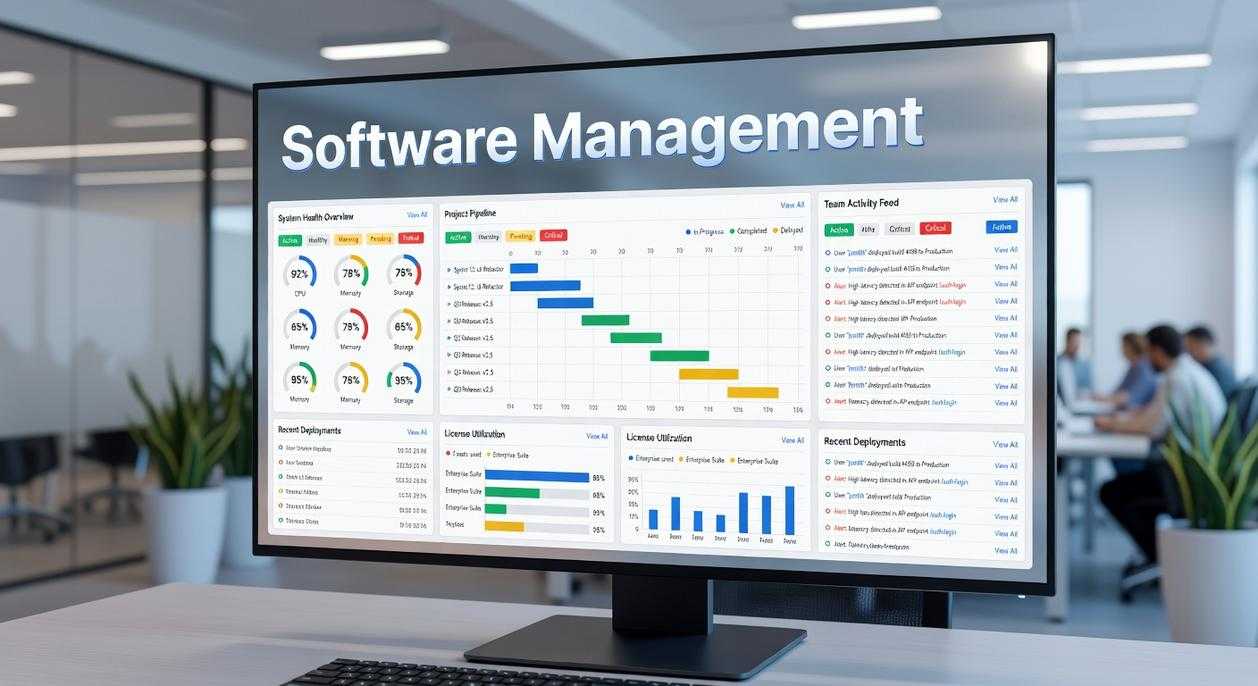
You need a Software Asset Management platform that actually works.
Not one that promises the world but leaves you doing half the work manually anyway.
I’ve seen companies buy expensive SAM tools only to realize they can’t track half their software. Or worse, the reporting is so confusing that nobody uses it.
Some IT managers say you don’t need specialized tools at all. They argue that spreadsheets and manual audits are good enough. And sure, if you’ve got five applications and unlimited time, maybe that works.
But here’s what they’re missing.
Manual tracking falls apart the moment your environment grows. You can’t catch shadow IT with a spreadsheet. You can’t spot compliance gaps when someone’s updating licenses in three different documents.
What to Look For in a SAM Platform
The right tool does the heavy lifting for you.
Automated Discovery is non-negotiable. Your platform should scan your entire network without you lifting a finger. That means on-premise servers and cloud environments. If you’re still manually cataloging software in 2024, you’re wasting time and missing assets. In the fast-evolving landscape of IT management, embracing innovative solutions like Wbsoftwarement for automated discovery is essential, as it allows organizations to efficiently scan both on-premise servers and cloud environments without the burden of manual cataloging, which is increasingly seen as a relic of the past. In the fast-evolving landscape of IT, embracing automated solutions like Wbsoftwarement is essential, as it empowers businesses to effortlessly discover and manage their entire software inventory without the burden of manual cataloging.
You also need a Centralized License Repository. Think of it as your single source of truth. Every purchase record, every contract, every entitlement lives in one place. When audit season hits (and it always does), you’re not scrambling through email chains and filing cabinets.
Usage Metering tells you what people actually use. Not what they installed. Not what you paid for. What they open and run. This data helps you reclaim unused licenses and stop renewing software that nobody touches.
Reporting & Dashboards should be clear enough that anyone on your team can understand them. You want to see your compliance status, spending patterns, and security risks at a glance. If you need a training course to read your own reports, the tool’s too complicated.
Integrations matter more than most people think. Your SAM platform needs to talk to your other systems. ITSM, procurement, endpoint security. When these tools work together, you get a complete picture without duplicate data entry.
The wbsoftwarement software guide by wealthybyte covers more technical selection criteria if you want to go deeper.
But here’s the bottom line.
Pick a platform that automates the boring stuff so you can focus on making smart decisions about your software spending.
Getting Started: Your First 90-Day Action Plan
Look, I know software asset management sounds complicated.
Most people think you need a massive team and a six-figure budget just to get started. They picture spreadsheets that never end and meetings that go nowhere.
That’s not how this works.
You can make real progress in 90 days. I’m talking about actual cost savings and better control over your software spend.
Here’s exactly what to do.
Days 1-30: Run a Targeted Audit
Don’t try to tackle everything at once. Pick ONE vendor that’s costing you serious money. Think Adobe, Microsoft, or Oracle.
Do a full inventory of what you actually have versus what you’re paying for. You’ll probably find licenses you forgot about or duplicates nobody’s using.
This is your quick win. The one that gets people to pay attention.
Days 31-60: Write a Basic Policy
Create a simple one-page document that explains how people request and get approval for new software. That’s it.
No 50-page manual. No legal jargon. Just clear rules anyone can follow.
This stops the bleeding. People can’t just buy whatever they want anymore (and yes, they’ve been doing that).
Days 61-90: Test a SAM Tool
Sign up for a free trial of a proper software management platform. Let it run discovery and show you what’s actually installed across your systems.
The automated reports will make your case better than any presentation you could build. When stakeholders see the data, they get it. With the insights provided in the Wbsoftwarement Software Guide by Wealthybyte, you can leverage automated reports to present your case more effectively than any traditional presentation could achieve, ensuring stakeholders grasp the essential data at a glance. By utilizing the insights from the Wbsoftwarement Software Guide by Wealthybyte, you can transform complex data into compelling automated reports that resonate with stakeholders far more than traditional presentations ever could. I cover this topic extensively in Software Advice Wbsoftwarement.
This ties into why cybersecurity matters wbsoftwarement. Unknown software creates security gaps you can’t afford.
That’s your 90 days. Three focused steps that build on each other and deliver results you can measure.
Take Command of Your Software Ecosystem
You now have a complete roadmap to implement a successful software management strategy.
I’ve given you everything from foundational principles to practical first steps. The framework works because it’s built on what actually matters in the real world.
Software chaos costs you money. It creates security gaps that keep you up at night. Every unmanaged license and forgotten subscription drains your budget while putting your organization at risk.
The 5-pillar framework gives you a structured process that you can repeat. It helps you maintain control and get real value from your software investments.
Here’s what you need to do: Begin your 90-day plan today. Start with a single vendor audit to build momentum and show immediate ROI.
Pick one vendor. Review what you’re paying and what you’re actually using. That first audit will reveal quick wins and prove the process works.
You came here to fix your software mess. Now you have the tools to do it.
The software guide wbsoftwarement approach isn’t complicated. It just requires you to take that first step and commit to the process.
Stop letting software vendors control your budget. Take command and start seeing results within the next 90 days.

 Ezarynna Flintfield writes the kind of tech news and innovations content that people actually send to each other. Not because it's flashy or controversial, but because it's the sort of thing where you read it and immediately think of three people who need to see it. Ezarynna has a talent for identifying the questions that a lot of people have but haven't quite figured out how to articulate yet — and then answering them properly.
They covers a lot of ground: Tech News and Innovations, Emerging Technology Trends, Practical Software Tips, and plenty of adjacent territory that doesn't always get treated with the same seriousness. The consistency across all of it is a certain kind of respect for the reader. Ezarynna doesn't assume people are stupid, and they doesn't assume they know everything either. They writes for someone who is genuinely trying to figure something out — because that's usually who's actually reading. That assumption shapes everything from how they structures an explanation to how much background they includes before getting to the point.
Beyond the practical stuff, there's something in Ezarynna's writing that reflects a real investment in the subject — not performed enthusiasm, but the kind of sustained interest that produces insight over time. They has been paying attention to tech news and innovations long enough that they notices things a more casual observer would miss. That depth shows up in the work in ways that are hard to fake.
Ezarynna Flintfield writes the kind of tech news and innovations content that people actually send to each other. Not because it's flashy or controversial, but because it's the sort of thing where you read it and immediately think of three people who need to see it. Ezarynna has a talent for identifying the questions that a lot of people have but haven't quite figured out how to articulate yet — and then answering them properly.
They covers a lot of ground: Tech News and Innovations, Emerging Technology Trends, Practical Software Tips, and plenty of adjacent territory that doesn't always get treated with the same seriousness. The consistency across all of it is a certain kind of respect for the reader. Ezarynna doesn't assume people are stupid, and they doesn't assume they know everything either. They writes for someone who is genuinely trying to figure something out — because that's usually who's actually reading. That assumption shapes everything from how they structures an explanation to how much background they includes before getting to the point.
Beyond the practical stuff, there's something in Ezarynna's writing that reflects a real investment in the subject — not performed enthusiasm, but the kind of sustained interest that produces insight over time. They has been paying attention to tech news and innovations long enough that they notices things a more casual observer would miss. That depth shows up in the work in ways that are hard to fake.