
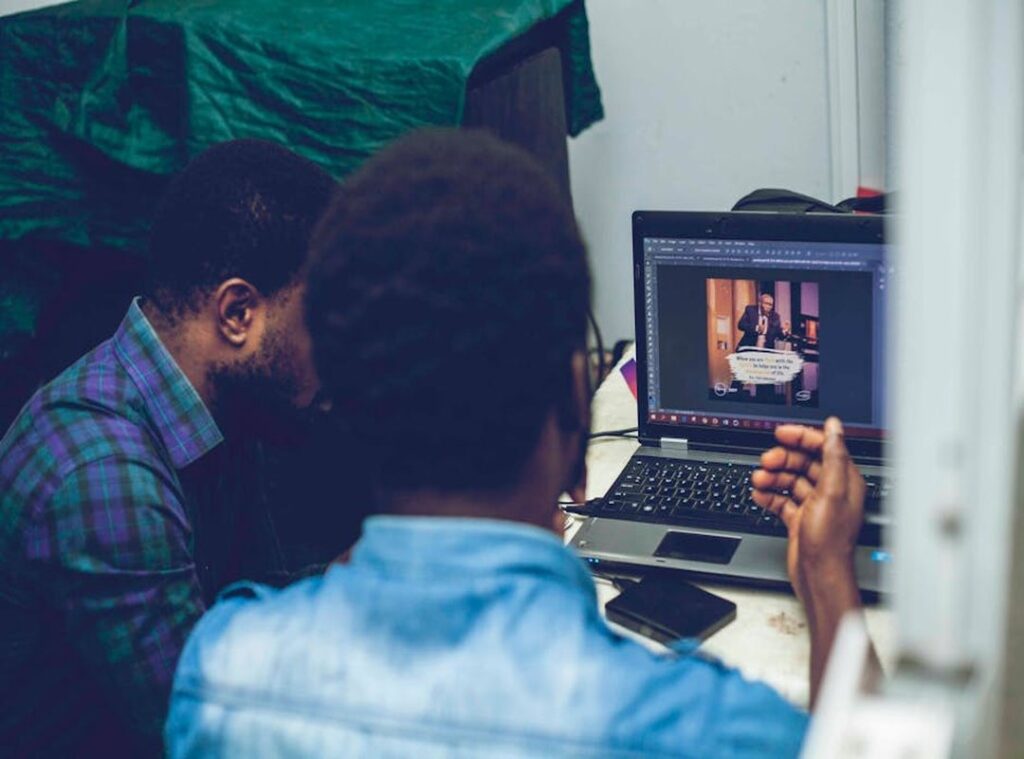
You’re staring at a blank screen. Trying to learn graphic design. But every path leads to a price tag or a 14-day trial that asks for your card.
I’ve been there.
Spent months digging through junk courses, outdated tutorials, and “free” tools that locked the good stuff behind a paywall.
So I tested over 200 resources. Filtered out anything that required payment, asked for credit card info, or assumed you already knew Photoshop. Kept only what works today (tools) with clean interfaces, real projects, and zero hidden limits.
This guide delivers exactly what the search intent promises: How to Learn Graphic Design for Free Gfxtek.
No fluff. No upsells. No “just sign up and we’ll email you later” nonsense.
Everything here is free. Truly free. Accessible from anywhere.
Built for beginners who want to make something real (not) watch someone else do it.
I’ve watched people go from zero to shipping client work in under three months using these exact tools.
You don’t need money. You need direction. That’s what this is.
Free Design Fundamentals: No Wallet Required
I learned color theory by breaking a client’s logo. Then I fixed it using Google’s Material Design Color Tool.
Pick a base hue. Click “Generate palette.” Drag the saturation slider until your eyes stop hurting. That’s your first lesson: color theory isn’t magic (it’s) contrast and intent.
Typography? It’s not about picking pretty fonts. It’s about readability, rhythm, and hierarchy.
Go to Typewolf’s free guides. Open one. Scroll to the “Font Pairing” section.
Copy two font names. Paste them into Google Fonts. Preview side-by-side.
Done.
Layout principles mean where things go. Not how they look. Try Figma’s free browser version.
Drop three rectangles on the canvas. Align them to a 12-column grid. Now move one off-grid.
See how wrong it feels? That’s layout.
Visual hierarchy tells the eye what to read first. Use Coolors.co’s “Create Palette” tool. Pick four shades.
Assign each to a text size (H1, H2, body, caption). Test it in a blank Notion page.
You don’t need Gfxtek to start. You don’t need any software. You need these four things (and) five minutes a day.
Beginners skip fundamentals to jump into Photoshop. Big mistake. You’ll spend hours fixing alignment issues you could’ve avoided with grid practice.
Self-check (do) this now:
- Recreate a magazine headline in Google Docs using only font weight and size
- Adjust spacing between two paragraphs until it feels right
3.
Swap background and text color on a webpage using browser dev tools
That’s it. Under ten minutes.
Free Tools That Actually Work
Figma is free. Not “free trial” free. Not “watermarked export” it. Free.
Inkscape? Free. Gravit Designer?
Shut down in 2021 (don’t) waste time there. Photopea? Free web app.
Runs in Chrome. No install needed.
You want to make a social media banner? Here’s how I do it:
Open Photopea. Go to File > New. Set it to 1200×630 pixels (that’s Facebook/LinkedIn).
Grab a free template from unDraw.co (paste) the SVG into Photopea. Add your text with the Type tool. Export as PNG.
Done.
No credit card. No sign-up. No surprise paywall.
Some people still think free = broken. I get it. But studios like Mailchimp and Dropbox use Figma daily.
Their design systems live in it. Not Adobe. Figma.
Inkscape handles SVG editing better than most paid apps. It opens Illustrator files (.ai) if you rename them to .pdf first. (Yes, really.)
Hardware? You need Chrome and 4GB RAM. That’s it.
My 2015 MacBook Air runs Photopea fine.
Figma needs internet. Inkscape doesn’t. Pick based on your workflow.
Not hype.
How to Learn Graphic Design for Free Gfxtek starts here. Not with theory. With doing.
I go into much more detail on this in Gfxtek Graphics Design Guide From Gfxmaker.
Don’t wait for permission. Open one of these right now. Try resizing an image in Photopea.
Then try drawing a vector shape in Inkscape. See which one feels less like work.
That’s your tool. Use it.
Free Design Practice That Actually Works

I tried every free design challenge out there. Most are vague. Or boring.
Or both.
Here are three I actually finished:
Logo redesign: Pick a local coffee shop with a terrible logo. Redesign it in 3 hours. Deliver one PNG and one SVG.
(Yes, you can make SVGs for free (Inkscape) works.)
Instagram post series: Make 5 cohesive posts for a fake bakery. Spend no more than 90 minutes total. Use Canva or Photopea.
Export as JPGs.
Responsive landing page mockup: Sketch a mobile + desktop version of a pet-sitting service. No code needed. Just Figma (free plan) or Penpot.
Deliver two screenshots.
You need real feedback (not) just likes. Go to r/DesignCritiques on Reddit. Say: *“I redid this logo because the original felt outdated.
What’s the first thing you notice?”* Not “What do you think?”. That’s useless.
Behance critique forums work too. But only if you comment on three other people’s work first. (It’s polite.
And it gets you better replies.)
Try DailyUI (but) skip the premium prompts. Just pick any screen from their archive and rebuild it with free tools. No subscription required.
Track your progress in Google Docs. One doc per project. Paste dated screenshots.
Write one sentence each week: “This is better than last week because…”
The Gfxtek graphics design guide from gfxmaker helped me stop chasing shiny tools and start building muscle memory.
How to Learn Graphic Design for Free Gfxtek isn’t about watching videos. It’s about shipping something (then) fixing it.
Did you finish one project yet?
Learning Paths That Actually Work. From Zero to Portfolio-Ready
I started with nothing but a laptop and GIMP. No subscriptions. No design degree.
Week 1: Learn the basics of composition and color theory (use) free Figma tutorials and make three mood boards.
Week 2: Practice typography in Inkscape. Export one poster. Print it.
Tape it to your wall. (You’ll look at it more than you think.)
Week 3: Build three icon variations in Inkscape. Write one sentence for each explaining why the shape, weight, or spacing works.
Week 4: Mock up a fake client site in Penpot. Export as static HTML. Host it on GitHub Pages.
Yes, it’s free and yes, it loads fast.
Week 5: Improve that site for mobile. Test it on your phone. If text is tiny or buttons don’t tap, fix it.
Consistency beats fancy tools every time. I know someone who landed freelance logo work after six weeks using only free software.
Week 6: Polish three pieces into a Carrd portfolio. Make sure it loads in under 2 seconds.
They didn’t wait for permission. They shipped daily.
If you’re wondering where to start with tools, check out which graphic design software is free Gfxtek (it) cuts through the noise.
Free hosting works. Free tools work. You just have to use them.
Your First Pixel Starts Now
I’ve been where you are. Staring at blank screens. Wondering if design is even possible without a degree.
Or a credit card.
It’s not about budget. It’s about starting before you feel ready.
You don’t need expensive software. You don’t need years of training. You just need How to Learn Graphic Design for Free Gfxtek (and) ten minutes.
Most people wait for permission. They scroll instead of sketch. They confuse “not knowing” with “not belonging.”
Wrong.
Every designer you admire opened a free tool first. Then clicked. Then messed up.
Then tried again.
So pick one resource from section 1. Right now. Do the 10-minute exercise before you close this tab.
No setup. No sign-up. Just you and the screen.
Your first pixel doesn’t need a price tag. Just your curiosity and five minutes.

 Roys Chamblisster has opinions about tech news and innovations. Informed ones, backed by real experience — but opinions nonetheless, and they doesn't try to disguise them as neutral observation. They thinks a lot of what gets written about Tech News and Innovations, Tech Product Reviews, Practical Software Tips is either too cautious to be useful or too confident to be credible, and they's work tends to sit deliberately in the space between those two failure modes.
Reading Roys's pieces, you get the sense of someone who has thought about this stuff seriously and arrived at actual conclusions — not just collected a range of perspectives and declined to pick one. That can be uncomfortable when they lands on something you disagree with. It's also why the writing is worth engaging with. Roys isn't interested in telling people what they want to hear. They is interested in telling them what they actually thinks, with enough reasoning behind it that you can push back if you want to. That kind of intellectual honesty is rarer than it should be.
What Roys is best at is the moment when a familiar topic reveals something unexpected — when the conventional wisdom turns out to be slightly off, or when a small shift in framing changes everything. They finds those moments consistently, which is why they's work tends to generate real discussion rather than just passive agreement.
Roys Chamblisster has opinions about tech news and innovations. Informed ones, backed by real experience — but opinions nonetheless, and they doesn't try to disguise them as neutral observation. They thinks a lot of what gets written about Tech News and Innovations, Tech Product Reviews, Practical Software Tips is either too cautious to be useful or too confident to be credible, and they's work tends to sit deliberately in the space between those two failure modes.
Reading Roys's pieces, you get the sense of someone who has thought about this stuff seriously and arrived at actual conclusions — not just collected a range of perspectives and declined to pick one. That can be uncomfortable when they lands on something you disagree with. It's also why the writing is worth engaging with. Roys isn't interested in telling people what they want to hear. They is interested in telling them what they actually thinks, with enough reasoning behind it that you can push back if you want to. That kind of intellectual honesty is rarer than it should be.
What Roys is best at is the moment when a familiar topic reveals something unexpected — when the conventional wisdom turns out to be slightly off, or when a small shift in framing changes everything. They finds those moments consistently, which is why they's work tends to generate real discussion rather than just passive agreement.